
Historical context
A story over 200 years in the making.
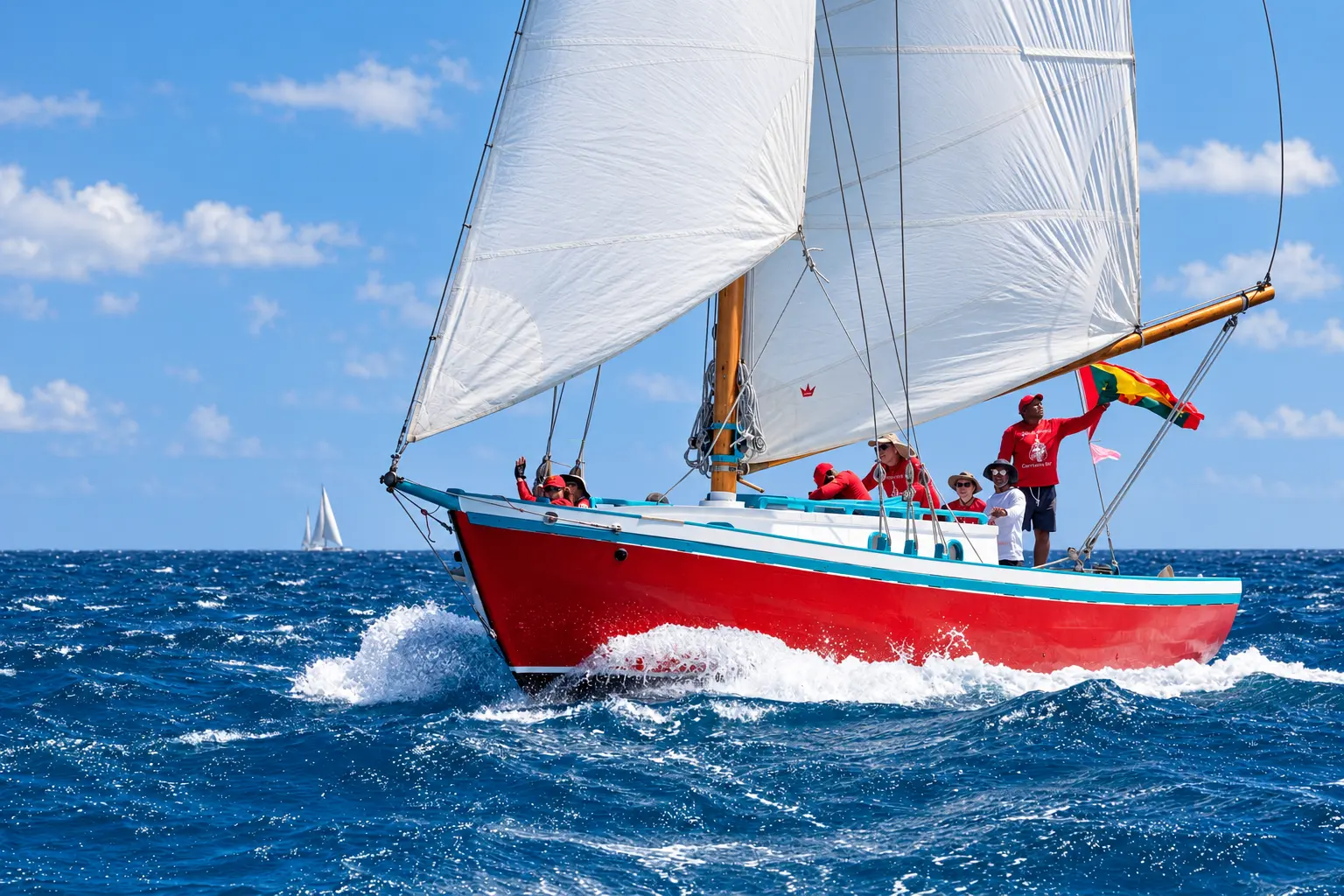
Long before tourism, trade was king. Carriacou and Petite Martinique, settled in the mid-1700s, lacked fresh water but became vital hubs for commerce between the southern Caribbean and South America.
By the 1840s, the first registered sloop was recorded from Carriacou. By the 1870s, larger schooners emerged, hand-built by local craftspeople using tools passed down like heirlooms.
John Rock, a Barbadian shipwright who migrated to Carriacou in the 1880s, introduced the overhanging or counter stern under the influence of Nova Scotian designs. The form brought greater stability and a smoother ride, becoming a hallmark of Carriacou sloops.
UNESCO recognition
Recognized by the world.
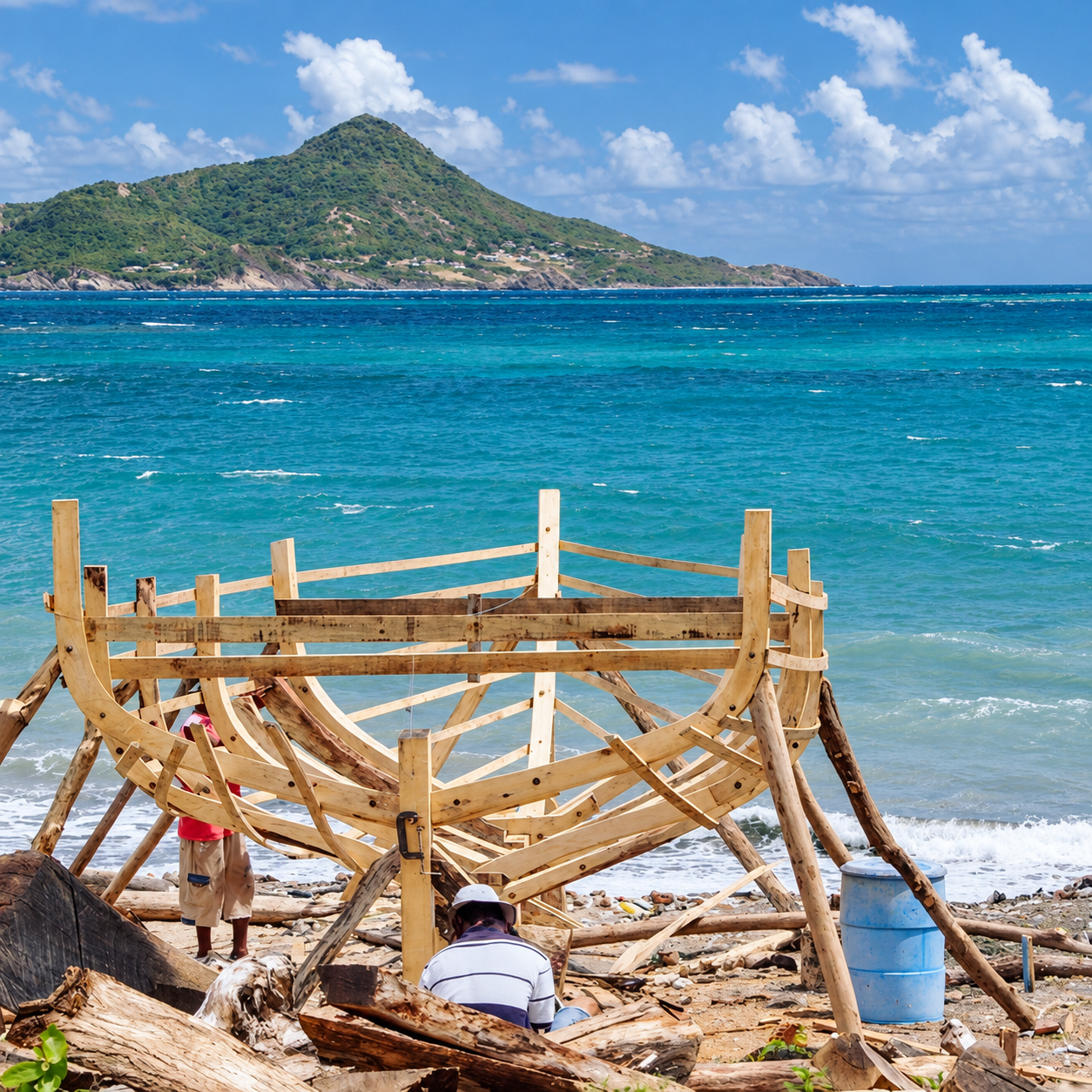
In December 2023, Traditional Wooden Boatbuilding in Carriacou and Petite Martinique was inscribed on UNESCO’s Representative List of the Intangible Cultural Heritage of Humanity.
The Maroon
A sacred launching ceremony.
The launching is a community gathering where food is shared, rum flows, a priest blesses the boat, psalms and chanties are sung, and the vessel’s name is revealed with a flag.
Libations honor ancestors. Big Drum Dance and string band music echo African rhythms. Supports are removed in a process called cutting down, and the vessel slides on planks into the tide—a moment of release, joy, and new beginnings.
Sailing with purpose
Why the tradition matters.
Modern ferries and steel-hulled ships have replaced many wooden workhorses, and the boatbuilding industry has slowed. It has not died.
Cultural champions including the late Pappy Stiell, Anthony McLawrence, Nero McLawrence, Zepherine McLaren, Ellis McLaren, and Alwyn Enoe helped carry the tradition forward. Their legacy is captured in Vanishing Sail: The Story of a Caribbean Tradition.
At Savvy, sloops are hand-built using methods passed down through generations. Captains and first mates are often apprentice shipwrights, storytellers, and inheritors of this culture. Every charter supports continued craftsmanship, keeps the story visible, and gives its economic value a future.
Sail aboard the tradition